Oralion
Oralion now interprets across up to 5 languages at once
Oralion now supports live translation between as many as five languages in the same room. Chinese, Indonesian, English, Tagalog, Vietnamese — everyone speaks the language they know best and reads the one they chose, so nobody has to switch.
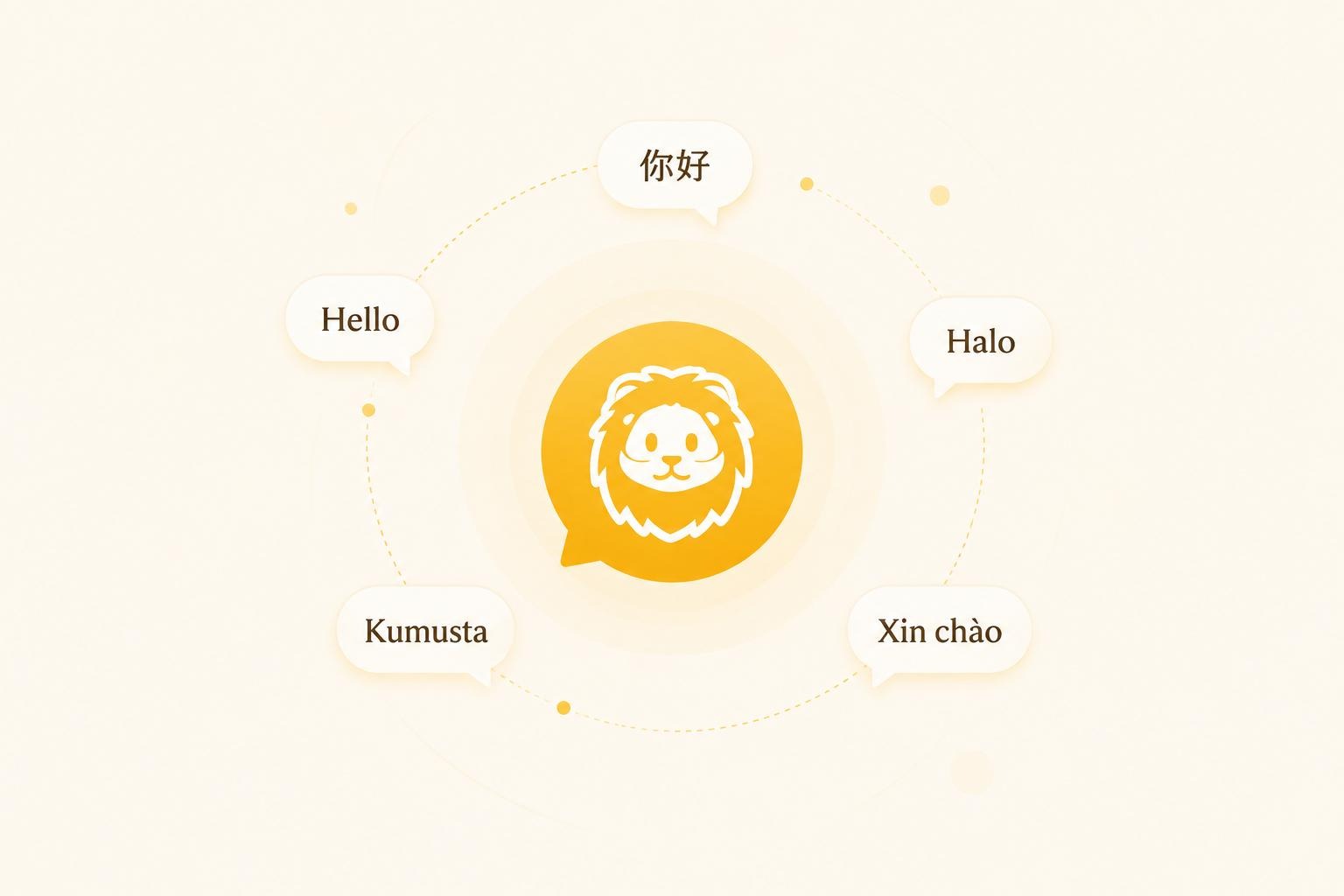
The hard part of cross-language communication is rarely two languages. It is that one room usually holds people from several countries at once.
A single event might have:
- Chinese speakers
- Indonesian speakers
- English speakers
- Filipino speakers
- Vietnamese speakers
Until now that meant hiring several interpreters, or picking one common language and leaving everyone else to keep up.
Oralion now interprets between as many as five languages in the same session.
Everyone speaks their own language
When you create a room, choose the languages you want to turn on — for example:
- Chinese
- Indonesian
- English
- Filipino (Tagalog)
- Vietnamese
Everyone then just speaks their own.
Oralion recognises and translates as they go, and each participant reads whichever language they picked. Nobody has to switch to a shared one.
Group discussions, training sessions, international conferences, cross-border teams — the conversation stays a conversation.
Why do more languages cost more?
Each extra language is another translation the system produces at the same time, and that is more AI computation.
So multilingual mode costs slightly more Credits:
Multilingual usage (per hour)
• 1–2 languages: 0.9 Credits
• 3 languages: 1.4 Credits
• 4 languages: 1.7 Credits
• 5 languages: 2.0 Credits
Even with all five turned on, an hour still costs far less than conventional simultaneous interpretation.
Where it fits
Multilingual mode suits:
- International conferences
- NGO and non-profit events
- Migrant-worker training and briefings
- Internal training at cross-border companies
- Campus exchange programmes
- Meetings of multinational teams
When people can use the language they think in, they say more — and they join in.
Speaking several languages should not be a constraint.
Oralion now lets five of them share one room, so everyone can speak freely and be understood.